


The AI scene is changing at a head-spinning rate. What once took months and twenty engineers can now be built in a weekend by one. A year ago, our company was organized around a single product; now, we’re working on a dozen projects in parallel with a team of the same size. And this is just the beginning.
The speed can feel exhilarating, but ultimately, it’s not the technological capabilities that matter. What matters is what these technologies are built for, and what future they engender. Is it one in which every person can use these tools to pursue what matters to each of us and develop our human capacities? Or is it one in which the technologies embedded in our lives become increasingly exploitative, and our ability to shape them constrained?
The decisions being made now—about ownership, openness, and who these systems answer to—will define our technological future. We believe whichever way it goes depends on whether open agents win over closed platforms. This means more control over your data, and a greater ability to create and modify the software and agents you rely on so they serve your intentions and interests, not the company that built them. That’s the future we’re building toward.
Of course, we’re not alone in these efforts. We’re inspired by conversations we’ve shared with builders like Geoffrey Litt and Joel Lehman; Cory Doctorow and Tim Wu’s writing; collectives like Resonant Computing and Cosmos Institute; philosophers like Seth Lazar and Shannon Vallor; and computing pioneers like Alan Kay and Tim Berners-Lee. All of them advocate for conditions that foster greater human freedom, creativity, and virtue.
This newsletter is a space to think together about the kind of future we want, and how to design the technologies and systems that help us get there. We hope this can be a way to stay anchored to the fundamental questions in a rapidly evolving AI landscape: What do human liberty and flourishing require, and how can we build technologies to serve them?
We’ll be sharing, ~weekly:
essays on how software, data, and AI can be built to serve the human good, informed by what we’re building here at Imbue
conversations with people building and thinking at the frontier
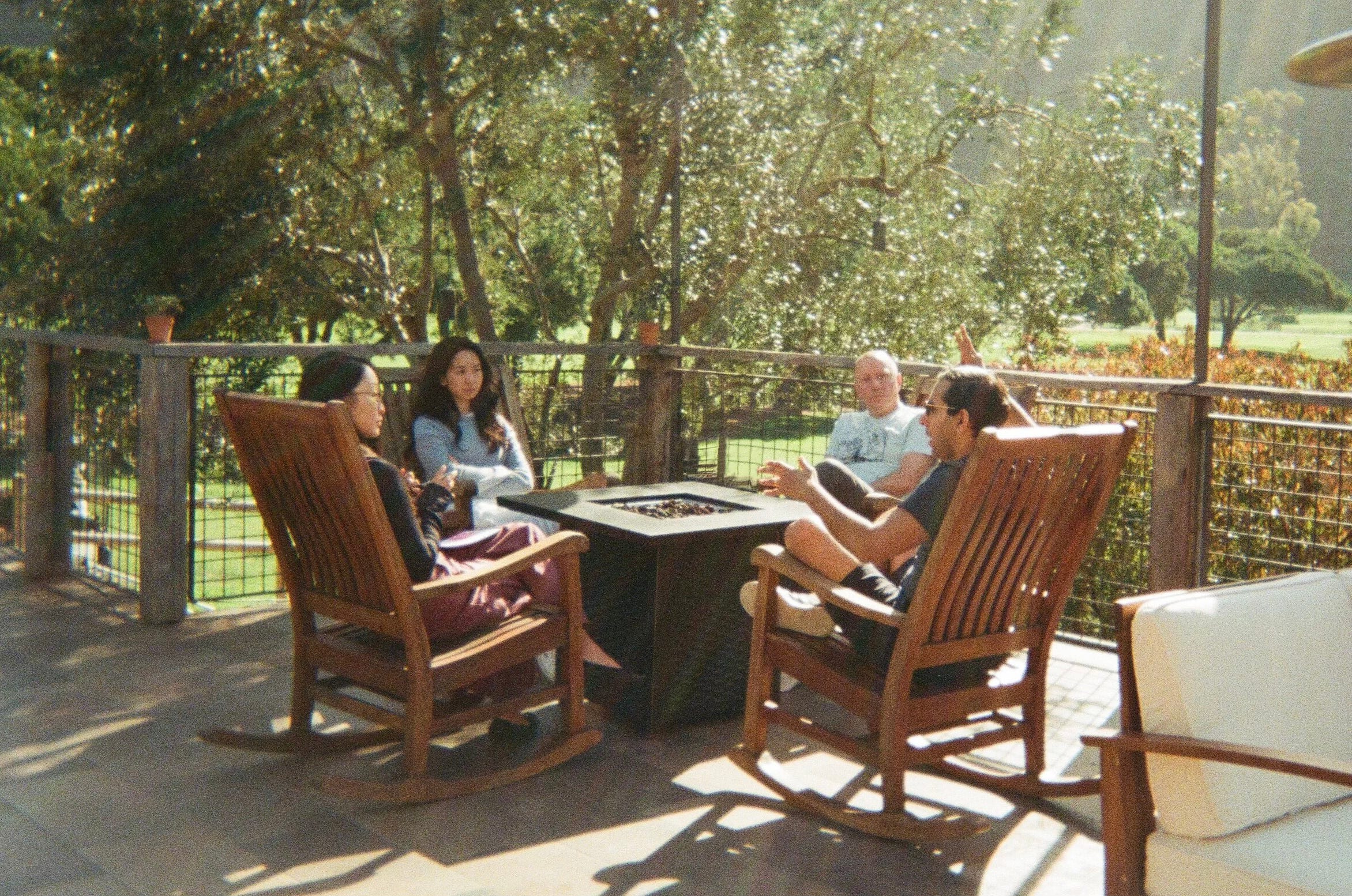
reflections on (and invites to!) the events we host in our SF office
the best things we’re reading that inform our thinking
If these questions interest you too, we’d love for you to join the conversation. What’s on your mind around our technological future? What worries you, and what brings you hope?
The future should be determined not by a handful of powerful companies or opaque systems, but by all of us humans, out in the open, together. This project, we hope, is a step in that direction.
— Kanjun, Josh, Ashley and the Imbue team
Upcoming events at Imbue
AI Philosophy Nights: The Post-Productive Human (sponsored by Imbue): A conversation with philosopher of technology Tony Kashani on the transformation of value creation and its implications on power, agency and meaning.
Friday, March 13, 6:30-9:30 PM
Cultivating audacity with Courtney Hohne (The Art of Being Human): A conversation with former Google Moonshot Factory Chief Storyteller Courtney Hohne on cultivating the imagination and courage to tackle the most urgent, ambitious problems we face today
Wednesday, March 25, 5:30-8:30 PM
I'm pleased to see the introduction of this space for us to share our ideas more publicly with the world! Here's hoping that we can steer the evolution of this technology in a direction that is principled and maximises human wellbeing!
Excited to be a part of this community. My own view is that far too much attention is being given to how AI and other new technologies are changing our external worlds and far too little attention is being give to how they changing our inner worlds--how we experience ourselves and reality itself.
Here's the short version of my view: Human consciousness has passed through four revolutions. The first, more than 100,000 years ago, produced self-awareness. The second produced meta-awareness: the recognition that we could be self-aware. The third, only 5,000 years ago, produced mathematics and writing, making it possible for the first time to transmit knowledge of awareness across generations.
AI is the fourth: not a tool revolution but a mind revolution, one already changing how we experience ourselves and the world.
The real stakes are not our jobs but our inner lives.
But I'm open to being convinced I'm wrong :)